
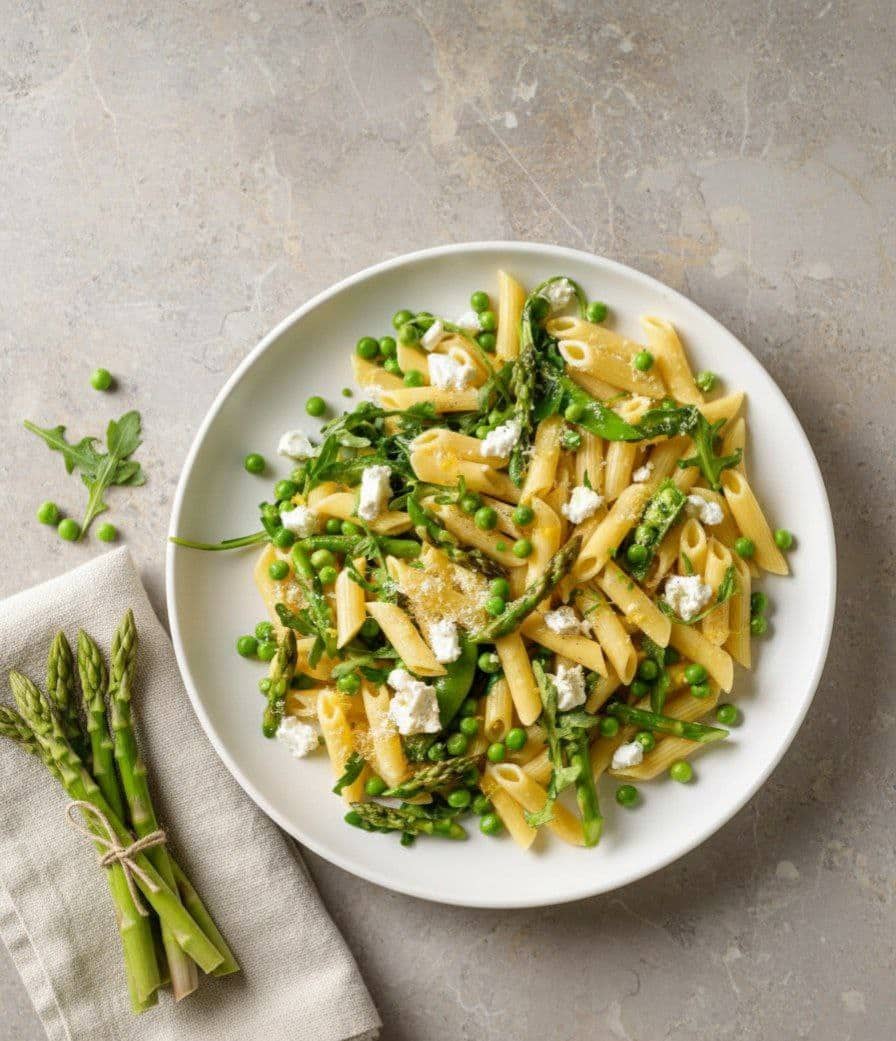
Springtime calls for light, colorful, and flavorful meals, and this spring vegetable pasta with goat cheese delivers all of that in a simple, weeknight-friendly dish. Packed with tender asparagus, fresh peas, peppery arugula, and creamy goat cheese, this pasta is vibrant, satisfying, and comes together in just about 30 minutes. It’s a perfect way to celebrate the flavors of the season while keeping dinner easy and nutritious.
A Quick and Flavorful Spring Pasta
When life gets busy, pasta is often our go-to. It’s versatile, quick, and always satisfying. This recipe combines fresh vegetables and creamy cheese to make a dish that feels special without requiring hours in the kitchen.
The key is in the simplicity: sauté a handful of spring vegetables, toss with a short pasta shape, add a squeeze of lemon, crumble some goat cheese on top, and finish with a sprinkling of fresh herbs. Dinner is done.
For this version, the main vegetables are asparagus, peas, and arugula, with optional pea shoots for an extra spring touch. However, you can swap in other quick-cooking greens or vegetables such as zucchini, broccoli, bell peppers, or fava beans. Served with a crisp side salad or a slice of crusty bread, it makes a complete and wholesome meal that feels elegant but is incredibly approachable.
Ingredients That Shine
This pasta is simple, relying on seasonal produce and basic pantry ingredients. Here’s what you’ll need:
- Pasta: Any short cut like penne, rotini, or orecchiette works beautifully. Gluten-free options such as brown rice pasta also pair well.
- Olive oil and butter: A combination of the two adds richness while keeping the dish light.
- Garlic and onion: A quick sauté infuses the vegetables with aromatic depth.
- Asparagus: Tender stalks provide crunch and a distinctly spring flavor.
- Peas: Fresh or frozen English or snap peas give sweetness and texture.
- Arugula: Adds a fresh, slightly peppery note; spinach or baby kale are good alternatives.
- Lemon: Brightens the dish with juice and zest. Meyer lemons work beautifully if you have them.
- Goat cheese: Creamy and tangy, it melts slightly into the pasta for a luscious finish.
- Parmesan cheese: A little extra salty flavor to complement the goat cheese.
- Fresh herbs: Parsley and chives add color and freshness.
- Salt and pepper: Season throughout cooking to enhance all flavors.
How to Prepare This Spring Vegetable Pasta
This pasta comes together quickly, making it ideal for weeknight dinners or any time you need a fresh, wholesome meal fast.
- Cook the pasta: Bring a large pot of salted water to a boil. Cook pasta until al dente, usually 8–10 minutes depending on the type. Drain and set aside.
- Sauté the vegetables: Heat olive oil and butter in a skillet over medium heat. Add minced garlic and cook for 1–2 minutes until fragrant. Add asparagus and cook for 2–3 minutes until just tender.
- Add the greens: Toss in peas, arugula, and optional pea shoots. Cook for another 1–2 minutes until vegetables are vibrant and tender. Season with salt, pepper, and a squeeze of lemon juice plus zest.
- Combine pasta and cheese: Add the cooked pasta to the skillet. Crumble goat cheese over the top and sprinkle with Parmesan. Toss everything together gently, letting the cheese melt slightly and coat the vegetables.
- Finish with herbs: Add minced parsley and chives. Serve immediately, with extra Parmesan on the side if desired.
The result is a bright, fresh pasta with a mix of creamy and crisp textures. Every bite bursts with spring flavors, from the tender vegetables to the tangy cheese and citrus notes.
Tips for the Perfect Spring Vegetable Pasta
- Pasta choice: Short shapes like penne or rotini pair nicely with chunky vegetables, while long pasta such as spaghetti or fettuccine works well if you prefer a more traditional pasta primavera feel.
- Vegetable variations: Feel free to experiment. Quick-cooking vegetables like zucchini, bell peppers, mushrooms, or baby kale all work well. Chop them roughly the same size for even cooking.
- Frozen vegetables: They’re a great option for year-round cooking. Adjust cooking time slightly, and you can still achieve a vibrant dish.
- Leftovers: Store in the fridge for up to 2–3 days. Reheat gently on the stovetop, adding a splash of olive oil or reserved pasta water to bring the pasta back to life.
-
Cook the pasta: Bring a large pot of salted water to a boil. Cook pasta al dente according to package instructions, about 8–10 minutes. Drain and set aside.
-
Sauté aromatics: In a large skillet, heat olive oil over medium heat until shimmering. Add butter, then garlic, and cook 1–2 minutes until golden and fragrant.
-
Cook vegetables: Add asparagus and sauté 2–3 minutes until slightly tender. Stir in peas, arugula, and pea shoots (if using) and cook another 1–2 minutes. Season with salt, pepper, lemon juice, and zest.
-
Combine pasta and cheese: Add the cooked pasta to the skillet. Sprinkle goat cheese and Parmesan over the top. Toss gently to combine, allowing the cheese to melt slightly and coat the vegetables.
-
Finish with herbs: Stir in parsley and chives. Serve warm with extra Parmesan if desired.
Notes
- Gluten-free option: Swap regular pasta for a gluten-free alternative such as brown rice or chickpea pasta.
- Adjust lemon flavor: Start with 1 Tbsp juice and ½ tsp zest, then taste and add more if desired. Meyer lemons add a slightly sweeter, more aromatic flavor.
- Creamier sauce: For a silkier texture, reserve ¼–½ cup of pasta water when draining, and add it along with the cheeses to create a light, creamy coating.
- Vegetable substitutions: Quick-cooking spring or summer vegetables like zucchini, bell peppers, broccoli, mushrooms, or baby kale work well. Cut all vegetables to similar sizes to ensure even cooking.
- Storage: Leftovers can be kept in an airtight container in the fridge for 2–3 days. Reheat gently on the stovetop with a splash of olive oil or pasta water.