
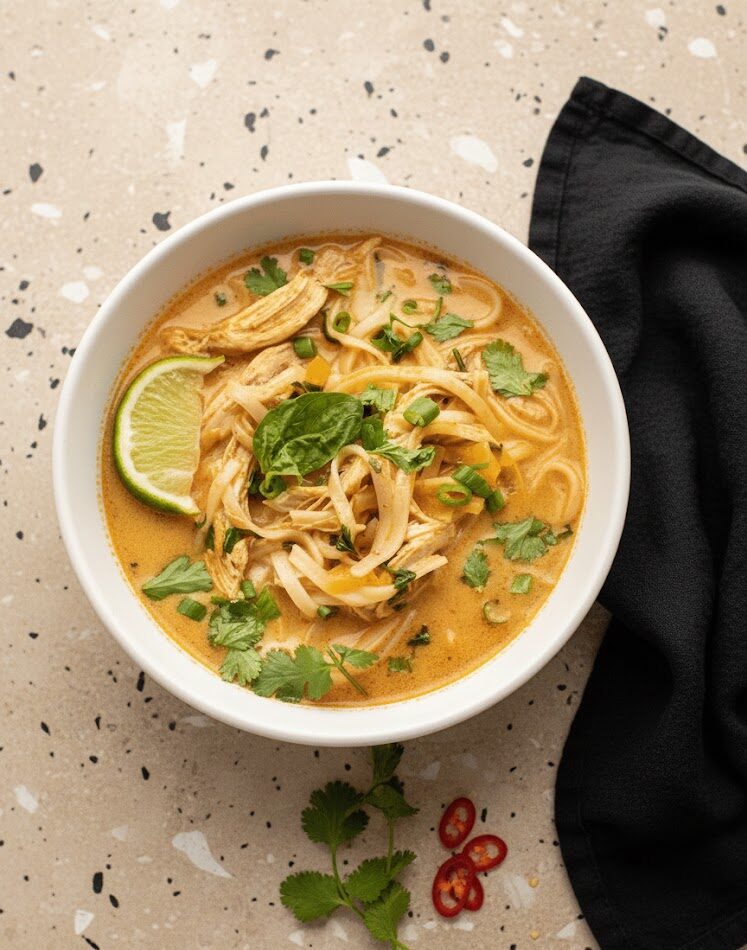
There are some recipes that instantly make a regular weeknight feel special, and this Thai-inspired chicken curry soup is one of them. It’s warm, fragrant, and deeply comforting, yet surprisingly light and fresh at the same time. With creamy coconut milk, aromatic red curry paste, bright lime, and tender chicken, this soup delivers bold flavor without requiring hours in the kitchen.
What makes this recipe especially appealing is how effortlessly it comes together. By using cooked chicken—like rotisserie or leftovers—you skip several steps while still ending up with a soup that tastes slow-simmered and restaurant-worthy. Everything happens in one pot, and from start to finish, you’re looking at about 20 minutes.
This is the kind of soup you make when you want something cozy but exciting, familiar yet slightly exotic. It’s perfect for busy evenings, chilly weather, or anytime you crave a bowl of something nourishing and full of character.
Why you’ll love it
This soup strikes a beautiful balance between richness and freshness. The coconut milk creates a silky, satisfying broth, while lime juice and fresh herbs keep everything bright and lively. The red curry paste adds warmth and depth without overpowering the dish, making each spoonful layered and comforting.
Another reason this recipe shines is its simplicity. The ingredient list is approachable, and you don’t need to visit a specialty market to make it happen. Despite the ease, the final result tastes complex and well-rounded, as if it simmered far longer than it actually did.
It’s also incredibly flexible. You can adjust the spice level, swap herbs, or add extra vegetables depending on what you have on hand. Whether you’re cooking for family, guests, or just yourself, this soup adapts beautifully.
What you’ll need
The ingredients work together to create a fragrant, creamy base with plenty of texture and flavor. Each one plays a specific role, but none are complicated or hard to find.
Oil
A small amount of olive oil is used to sauté the aromatics and start building flavor. You can substitute with another neutral oil if you prefer.
Onion and garlic
These form the foundation of the soup. Finely chopped onion softens into the broth, adding sweetness, while garlic brings savory depth.
Fresh ginger
Ginger adds a bright, slightly spicy note that complements the curry paste beautifully. Fresh is best here for a clean, vibrant flavor.
Red curry paste
This is where much of the flavor comes from. Different brands vary in heat and intensity, so it’s a good idea to taste yours before adding the full amount.
Broth
Chicken or vegetable broth both work well. The broth provides body and savory richness without weighing the soup down.
Lime juice
Freshly squeezed lime juice adds acidity and brightness, balancing the richness of the coconut milk.
Rice noodles
Rice noodles make the soup hearty and satisfying. Thicker varieties tend to hold their texture better, but thinner ones will still work.
Coconut milk
Full-fat coconut milk gives the broth its signature creaminess and smooth mouthfeel.
Cooked chicken
Shredded chicken keeps things easy and efficient. Rotisserie chicken is ideal, but any cooked chicken will do.
Fresh herbs
Basil, cilantro, and scallions bring freshness and color, tying all the flavors together just before serving.
Pro tips
A few simple tips can make this soup even better and help the cooking process go smoothly.
Freezing fresh ginger makes it easier to grate and helps it last longer without losing flavor.
Prep your herbs and toppings while the soup simmers so everything is ready to go at the same time.
Always taste your curry paste before adding it all at once, as heat levels can vary widely between brands.
Add herbs at the very end to keep their flavor bright and fresh.
How to make it
The cooking process is straightforward and designed to build flavor quickly without unnecessary steps.
Start by heating oil in a large pot and sautéing the onion until soft and translucent. This step lays the groundwork for a flavorful broth. Once the onion is ready, add the garlic, ginger, and curry paste. Cooking these briefly releases their aromas and deepens their flavor.
Next, pour in the broth, water, and lime juice. Bring everything to a gentle boil before adding the rice noodles. As the noodles cook, they absorb the fragrant broth and soften perfectly.
Once the noodles are tender, stir in the coconut milk and shredded chicken. Lower the heat and let the soup simmer gently until everything is heated through and well combined. Just before serving, add the fresh herbs and adjust the seasoning to taste.
Substitutions and variations
This soup is easy to customize based on preferences and dietary needs. If you don’t enjoy cilantro, simply leave it out and use basil and scallions instead. For deeper savory flavor, a small splash of fish sauce can be added to the broth.
If you like more heat, stir in crushed red pepper flakes, fresh chilies, or a bit of chili paste. You can also bulk up the soup with vegetables like bell peppers, mushrooms, or spinach for extra texture and nutrition.
What to serve with it
This Thai-style chicken curry soup is satisfying enough to enjoy on its own, especially thanks to the noodles and creamy broth. That said, pairing it with a simple side can turn it into a more complete and memorable meal.
A slice of crusty bread or warm flatbread is perfect for soaking up every last drop of the broth. If you want to keep things lighter and closer to Thai-inspired flavors, fresh bean sprouts, shredded cabbage, or a small cucumber salad with lime dressing make excellent accompaniments.
For entertaining, this soup works beautifully as part of a larger spread. Serve it alongside a light salad, spring rolls, or steamed vegetables to create a balanced menu that feels thoughtful but not complicated.
Storage and leftovers
This soup stores well, making it a great option for meal prep or next-day lunches. Once cooled, transfer leftovers to an airtight container and keep them in the refrigerator for up to 3–4 days.
Keep in mind that rice noodles tend to absorb liquid as they sit. When reheating, you may want to add a splash of broth or water to loosen the soup and restore its original texture. Reheat gently on the stovetop over low to medium heat, stirring occasionally.
Freezing is possible, but not ideal. The noodles may become overly soft, and the chicken can lose some of its tenderness. If you plan to freeze it, consider making the soup without noodles and adding freshly cooked noodles when reheating.
A comforting soup you’ll come back to
This creamy Thai chicken curry soup is proof that big flavor doesn’t require complicated techniques or hours in the kitchen. It’s approachable, adaptable, and deeply comforting—exactly the kind of recipe you’ll find yourself making again and again.
Whether you’re cooking for a busy weeknight, craving something warm and aromatic, or simply looking for a reliable soup that delivers every time, this one fits the bill. The combination of coconut milk, curry, lime, and herbs creates a bowl that feels nourishing and special, yet easy enough for everyday cooking.
Description
This creamy Thai chicken curry soup is fragrant, comforting, and full of layered flavor. Made with coconut milk, red curry paste, rice noodles, and tender chicken, it comes together quickly and makes a perfect weeknight meal.
-
Heat the olive oil in a large pot over medium heat. Add the chopped onion and sauté for about 5 minutes, until soft and translucent.
-
Stir in the ginger, garlic, and red curry paste. Cook for about 30 seconds, until fragrant.
-
Pour in the broth, water, and lime juice. Bring to a gentle boil.
-
Add the rice noodles and cook until just tender, following package timing.
-
Stir in the coconut milk and shredded chicken. Reduce heat and let the soup simmer gently for about 10 minutes.
-
Remove from heat and stir in basil, cilantro, and scallions. Season with salt and pepper to taste.
-
Serve hot, with extra lime wedges if desired.
Notes
- Curry paste brands vary greatly in spice level. Start with a smaller amount and add more as needed.
- Thicker rice noodles hold their texture better in soup, but any rice noodle variety can be used.
- Add extra broth when reheating, as the noodles will continue to absorb liquid.
- For extra depth, a small splash of fish sauce can be added to the broth.