
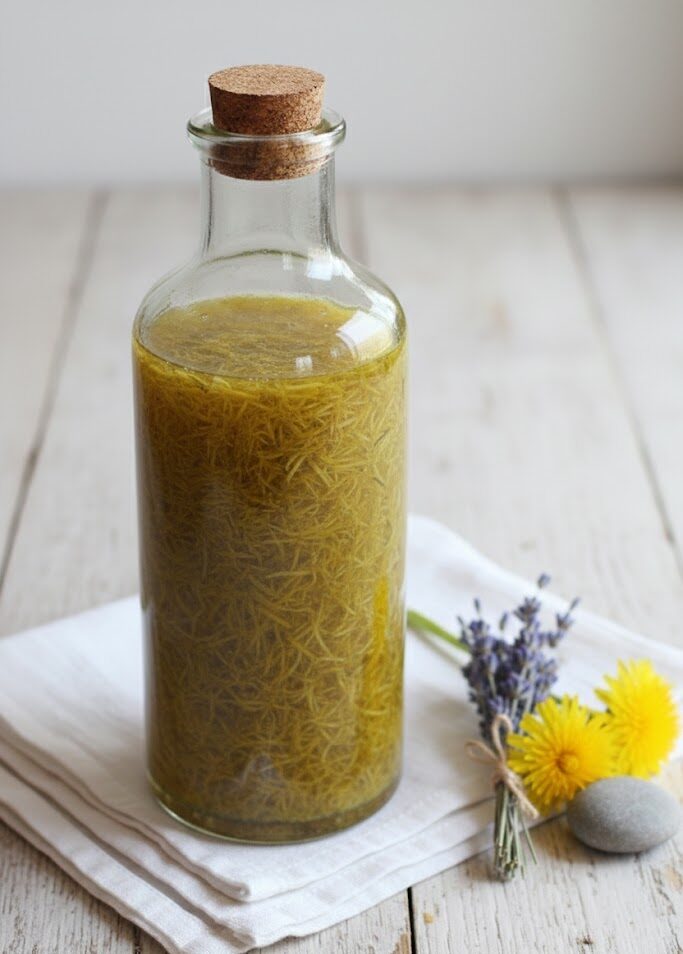
Dandelion jelly truly feels like sunshine captured in a jar. With its delicate floral sweetness and golden glow, it transforms an ordinary slice of toast into something special. If you’ve ever looked at a yard full of bright yellow blooms and wondered what to do with them, this recipe is your answer.
Homemade flower jellies are surprisingly simple, and dandelions are one of the most accessible edible flowers around. Once you taste this gently sweet, honey-like spread, you may never see these cheerful blossoms the same way again.
What Does Dandelion Jelly Taste Like?
If you close your eyes and take a spoonful, you’ll notice a light floral flavor that resembles mild honey. It’s subtly sweet, fresh, and slightly herbal, with a brightness that makes it perfect for spring and early summer.
Unlike fruit-based jams, dandelion jelly doesn’t have tart berry notes. Instead, it offers a clean, delicate sweetness that pairs beautifully with buttered toast, biscuits, scones, or even as a glaze for pastries.
The key to great flavor is removing all the green parts of the flower. The yellow petals hold the sweetness, while the green sepals can add bitterness.
Ethically Harvesting Dandelions
Whenever edible flowers come up, someone inevitably asks about the bees. The good news is that harvesting dandelions responsibly can actually encourage more blooms. Dandelions are hardy plants. When flowers are picked, the plant often responds by producing more.
That said, ethical foraging principles still apply:
- Never harvest all the flowers from one area.
- Leave plenty for pollinators.
- Avoid areas treated with pesticides or herbicides.
- Skip roadsides or places exposed to heavy traffic pollution.
Choose a clean, unsprayed lawn or meadow where dandelions grow abundantly. If you manage your own yard, consider letting a section bloom freely during spring before mowing. Not only will bees benefit, but you’ll have a ready supply for making dandelion jelly.
In recent years, more people have rediscovered edible “weeds,” and dandelions have become a favorite among home cooks and foragers alike. Sometimes all it takes is one jar of homemade jelly to change how someone sees their lawn.
How to Make Dandelion Jelly
Making dandelion jelly follows the same basic process as most homemade jellies. The main difference is that instead of fruit juice, you’ll create a strong dandelion petal tea as your base.
Here’s the overall process:
- Harvest fresh dandelion flowers.
- Separate the yellow petals from the green parts.
- Steep the petals to make a strong tea.
- Combine the tea with lemon juice and pectin.
- Add sugar and boil.
- Pour into jars and allow to set.
- Optionally process in a water bath canner.
The result is a clear, golden jelly that sets beautifully and spreads smoothly.
Harvesting Dandelions for Jelly
You’ll need about 8 cups of whole dandelion flower heads to produce roughly 4 cups of loose petals (or 2 cups packed). This may sound like a lot, but it goes quickly, especially if you’re gathering from a lawn filled with blooms.
Pick flowers during mid-morning on a dry day when they’re fully open. Avoid flowers that have begun turning into seed heads.
The most time-consuming part of making dandelion jelly is separating the petals. Tear each flower in half and gently pull the yellow petals away from the green base. Take your time—this step ensures your jelly stays sweet and not bitter.
Expect this process to take about an hour. It’s a peaceful task, perfect for sitting outside in the shade or working at the kitchen table.
Making Dandelion Tea
Once your petals are cleaned, it’s time to extract their flavor.
Place 4 cups of loosely packed petals (or 2 cups packed) into a heatproof jar or bowl. Pour 4 cups of boiling water over them, ensuring the petals are fully submerged.
Cover and allow the mixture to steep for at least one hour. For deeper flavor, you can let it sit up to 24 hours in the refrigerator.
After steeping, strain the liquid through a fine sieve or cheesecloth. Press or squeeze the petals to extract every bit of golden liquid. You should have about 3 3/4 to 4 cups of dandelion tea.
This fragrant tea is the base of your dandelion jelly.
Choosing the Right Pectin
Unlike fruits, dandelion petals contain no natural pectin. To achieve a proper gel, you’ll need to add commercial pectin.
One of the most widely available options is Sure-Jell powdered pectin. It works reliably but requires a significant amount of sugar to set properly.
Liquid pectin is another option, though it often requires even more sugar and may contain preservatives.
For those who prefer lower sugar recipes, Pomona’s Universal Pectin is an excellent choice. It uses calcium to activate the pectin rather than relying on sugar, allowing you to adjust sweetness to your taste.
Whichever type you choose, carefully follow the package instructions, as the order of adding ingredients may differ.
Cooking the Dandelion Jelly
Once your dandelion tea is strained and measured, you’re ready to transform it into a beautiful golden jelly.
Pour 4 cups of dandelion tea into a heavy-bottomed saucepan or jam pot. If you’re slightly under, you can top it up with a small amount of water, but try to stay as close to 4 cups as possible for proper setting.
Add:
- 2 tablespoons fresh lemon juice (or 1/2 teaspoon citric acid)
- 1 box powdered pectin (if using a standard high-sugar pectin)
Do not add the sugar yet.
Bring the mixture to a rolling boil over high heat, stirring constantly to prevent sticking. Once it reaches a full, vigorous boil that cannot be stirred down, add 4 cups of granulated sugar all at once.
Stir well to dissolve the sugar completely. Return the mixture to a hard boil and allow it to boil rapidly for 1–2 minutes. The liquid will become slightly thicker and glossy.
Remove from heat and immediately pour into prepared jars, leaving about 1/4 inch headspace. Wipe the rims clean before sealing.
Allow the jars to cool undisturbed for at least 12 hours. Jelly can take up to 48 hours to fully set, so patience is important. Avoid moving the jars while they are setting.
Flavor Variations
While classic dandelion jelly has a delicate honey-like taste, you can experiment with subtle additions that complement its floral character.
Lavender: A small pinch of culinary lavender added during steeping creates a soft, aromatic blend.
Strawberries: For a fruit-forward version, combine part dandelion tea with strawberry juice for a sweet spring preserve.
Citrus Zest: A touch of lemon or orange zest brightens the flavor without overpowering it.
Keep additions subtle. The charm of dandelion jelly lies in its gentle floral notes.
Canning Dandelion Jelly Safely
If you plan to store your jelly at room temperature, water bath canning is recommended.
Because dandelion petals are not naturally acidic like most fruits, lemon juice or citric acid is essential. The final pH must remain at or below 4.6 for safe water bath processing.
Water Bath Canning Instructions
- Prepare a water bath canner before cooking the jelly.
- Sterilize jars and keep them hot until filling.
- Fill jars with hot jelly, leaving 1/4 inch headspace.
- Remove air bubbles and wipe rims clean.
- Apply lids and bands until fingertip tight.
- Process in boiling water for 10 minutes (adjust for altitude if necessary).
- Remove jars and let cool on a towel undisturbed for 24 hours.
After 24 hours, check seals. Properly sealed jars can be stored in a cool, dark pantry for 12–18 months. Refrigerate after opening.
If you prefer not to can, store the jelly in the refrigerator for several weeks or freeze for up to 6 months.
- Harvest about 8 cups of dandelion flower heads. Remove and discard all green parts, keeping only the yellow petals.
- Place petals in a heatproof container and pour 4 cups boiling water over them.
- Cover and steep for at least 1 hour, or up to 24 hours in the refrigerator.
- Strain the tea, pressing petals to extract all liquid. Measure 4 cups of tea.
- Pour tea into a large saucepan. Add lemon juice and powdered pectin. Do not add sugar yet.
- Bring to a full rolling boil over high heat, stirring constantly.
- Add sugar all at once and stir until dissolved.
- Return to a hard boil and cook 1–2 minutes.
- Remove from heat and pour into prepared jars, leaving 1/4 inch headspace.
- Seal and allow to cool undisturbed for 12–48 hours until fully set.
Notes
- Ensure flowers are harvested from unsprayed, pesticide-free areas.
- Remove all green parts carefully to prevent bitterness.
- Jelly may take up to 48 hours to fully set.
- For lower sugar versions, follow package instructions if using low-sugar pectin.
- Always adjust processing time for altitude if canning.