
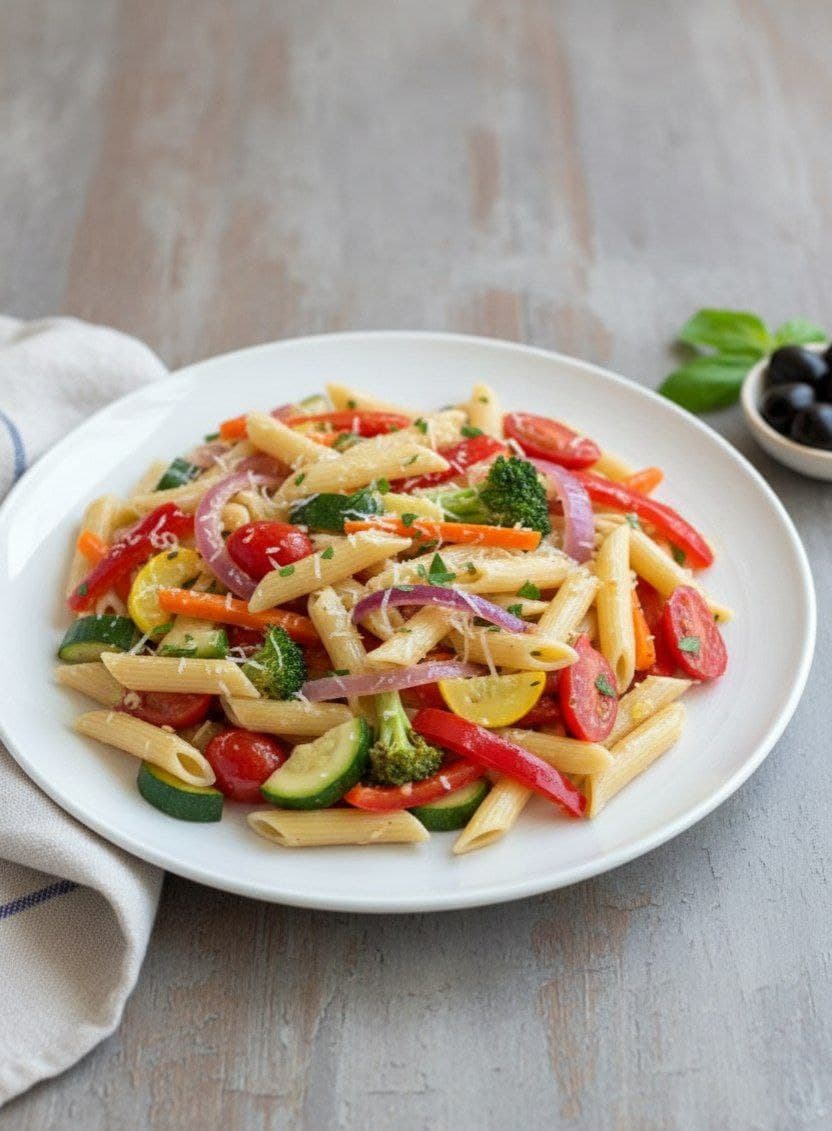
Pasta Primavera isn’t limited to spring or summer. This vibrant vegetable pasta is a comforting, satisfying meal that works beautifully in every season. Packed with fresh vegetables, tossed with pasta, olive oil, garlic, cheese, and a hint of lemon, it’s the kind of recipe that feels both light and nourishing while still being filling enough for dinner.
One of the best things about this dish is its flexibility. You can easily adapt it to what you already have in your fridge, making it a practical option for busy weeknights or when you want to use up vegetables before they go bad. Despite its simplicity, the flavors are layered and well balanced, with savory garlic, salty cheese, and fresh citrus in every bite.
What Is Pasta Primavera?
Pasta Primavera is a pasta dish made with a variety of fresh vegetables, lightly cooked and combined with pasta rather than being covered in a heavy sauce. While many people associate it with Italian cuisine, it actually originated in the United States and became popular thanks to its fresh flavors and colorful presentation.
Over time, many versions have appeared. Some include cream-based sauces, while others—like this one—rely on olive oil, cheese, and pasta water to create a light coating that lets the vegetables shine. This approach keeps the dish fresh, flavorful, and suitable for year-round cooking.
Why You’ll Love This Pasta Primavera
There are plenty of reasons this recipe deserves a regular spot in your meal rotation:
- It’s loaded with vegetables, making it both nutritious and satisfying
- A great way to reduce food waste by using leftover produce
- Filling without feeling heavy
- Kid-friendly thanks to the bright colors and mild flavors
- Visually appealing, which makes it perfect for family dinners or entertaining
- Lighter than cream-based pasta dishes
- Works equally well as a main course or a side dish
The combination of garlic, parmesan, olive oil, and lemon brings everything together without overpowering the vegetables.
A Balanced and Wholesome Meal
Pasta often gets a bad reputation, but when paired with plenty of vegetables and prepared with simple, quality ingredients, it can absolutely be part of a balanced lifestyle. This dish brings together carbohydrates, healthy fats, fiber-rich vegetables, and protein from cheese, creating a well-rounded plate that feels both comforting and fresh.
Ingredients You’ll Need
This recipe uses everyday ingredients that are easy to find and easy to swap if needed:
- Short pasta such as penne
- Salt
- Olive oil
- Fresh vegetables like red onion, carrot, broccoli, bell pepper, zucchini, yellow squash, tomatoes, and garlic
- Dried Italian-style herbs
- Fresh lemon juice
- Fresh parsley
- Grated parmesan-style cheese
Each ingredient plays a role in building flavor while keeping the dish light and vibrant.
How to Make Pasta Primavera
This recipe comes together quickly once the prep work is done. While there is some chopping involved, the cooking process itself is fast and straightforward.
Step 1: Cook the Pasta
Bring a large pot of well-salted water to a boil and cook the pasta until just al dente. Before draining, reserve some of the pasta water to help bring everything together later.
Step 2: Cook the Vegetables
While the pasta cooks, heat olive oil in a large skillet and sauté the vegetables in stages, starting with the ones that take longer to soften. This ensures everything is perfectly tender but still slightly crisp.
Step 3: Combine and Season
Toss the cooked pasta with the vegetables, lemon juice, cheese, herbs, and a splash of pasta water until everything is well coated and glossy.
Can You Use Different Vegetables?
One of the biggest advantages of this pasta dish is how adaptable it is. While the recipe below includes a mix of colorful vegetables, you can easily swap in others depending on the season or what you already have on hand.
Some excellent alternatives include asparagus, green beans, peas, cauliflower, spinach, mushrooms, or eggplant. Leafy greens can be stirred in at the very end so they wilt gently from the heat of the pasta. Root vegetables should be sliced thinly to ensure they cook evenly and quickly.
This flexibility makes the dish ideal for every time of year, from lighter spring vegetables to heartier autumn options.
What’s the Best Pasta Shape to Use?
Short pasta shapes work best because they hold onto the vegetables and cheese without becoming heavy. Penne is a popular choice, but many other shapes work just as well.
Good options include fusilli, farfalle, ziti, gemelli, or rigatoni. Choose a shape with ridges or curves so the olive oil, cheese, and herbs cling to every bite.
Adding Protein to Pasta Primavera
If you’d like to turn this dish into an even more filling meal, adding protein is simple. Grilled or roasted chicken pairs well with the vegetables, as does sautéed shrimp. You can also use rotisserie chicken for convenience.
For a vegetarian option, white beans or chickpeas can be stirred in near the end. They add both protein and texture without overpowering the dish.
Tips for the Best Results
- Cook the pasta just until al dente so it doesn’t become mushy when mixed with the vegetables
- Salt the pasta water generously to build flavor from the start
- Avoid overcooking the vegetables; they should be tender but still slightly crisp
- Add cheese gradually and taste as you go
- Use pasta water to adjust the texture instead of extra oil
A final sprinkle of fresh herbs or a bit of lemon zest just before serving can really brighten the dish.
Serving Ideas
This pasta works beautifully on its own as a main dish, but it can also be served alongside grilled meats, roasted fish, or a simple green salad. For gatherings, it makes an excellent side dish that can be served warm or at room temperature.
10 oz short pasta (such as penne)
Salt, for cooking pasta
1/4 cup olive oil
1/2 medium red onion, thinly sliced
1 large carrot, julienned
2 cups broccoli florets, sliced into small pieces
1 red bell pepper, thinly sliced
1 medium zucchini, quartered and sliced
1 medium yellow squash, quartered and sliced
3 cloves garlic, minced
1 cup cherry or grape tomatoes, halved
2 teaspoons dried Italian-style seasoning
1/2 cup reserved pasta water (as needed)
2 tablespoons fresh lemon juice
1/2 cup finely grated parmesan-style cheese, divided
2 tablespoons chopped fresh parsley
-
Bring a large pot of water to a boil. Season generously with salt and cook the pasta according to package instructions until al dente. Reserve 1/2 cup of the cooking water, then drain the pasta.
-
While the pasta cooks, heat olive oil in a large skillet over medium-high heat.
-
Add the red onion and carrot and cook for about 2 minutes, stirring occasionally.
-
Add broccoli and bell pepper and cook for another 2 minutes.
-
Stir in zucchini and yellow squash and cook for 2 to 3 minutes, until the vegetables are just tender.
-
Add garlic, tomatoes, and dried seasoning and cook for 1 to 2 minutes, until fragrant.
-
Transfer the vegetables to the pasta pot or a large serving bowl. Add the drained pasta, lemon juice, and a small amount of pasta water. Toss to combine, adding more pasta water as needed to create a light coating.
-
Stir in half of the cheese and the parsley. Serve warm with the remaining cheese sprinkled on top.
Notes
- For a cheesier dish, increase the cheese to 1 cup.
- A small amount of butter or broth can be added if additional moisture is needed.
- Fresh basil can be used in place of parsley for a different flavor profile.