
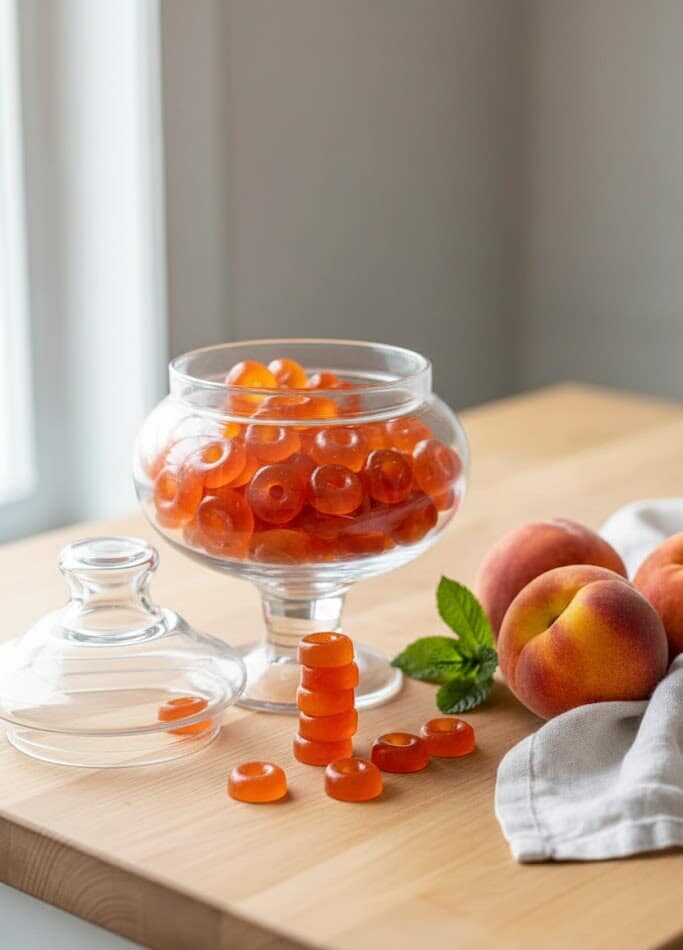
There’s something irresistibly nostalgic about peach rings. Their bright color, sweet aroma, and satisfyingly chewy bite make them a favorite for any gummy candy lover. But what if you could recreate that same stretchy texture at home using real fruit?
These homemade gummy peach rings are made with fresh peach puree and gelatin to create a bouncy, elastic texture that’s remarkably close to classic gummy candy. The flavor is vibrant, naturally fruity, and far more authentic than store-bought versions. Best of all, you control every ingredient that goes into them.
If you’ve ever wanted to master fruit-based gummies from scratch, this recipe will walk you through it step by step.
Why Gelatin Makes the Perfect Gummy Texture
When it comes to homemade fruit candy, texture matters just as much as flavor. There are two main ways to make gummies: with pectin or with gelatin.
Gelatin produces that iconic stretchy chew most people associate with gummy bears. Pectin, on the other hand, creates a firmer, more jelly-like texture similar to gumdrops.
For these homemade gummy peach rings, gelatin is the key to achieving:
- A bouncy, elastic bite
- A flexible yet firm structure
- A glossy, almost glass-like finish
However, gelatin-based gummies do require an additional curing phase after molding. This drying step transforms them from firm jelly to true chewy candy.
Another important note: gelatin melts at lower temperatures. That means these candies aren’t as heat-stable as pectin versions. Leave them in a hot car and they’ll soften quickly.
Plan Ahead: Setting and Curing Time
While active cooking time is only about an hour, the full process takes 2–4 days. Here’s why:
- The gummies must chill overnight to fully set.
- After unmolding, they need 1–3 days to air-dry (or cure).
This curing stage reduces surface moisture and firms the exterior, giving the rings their characteristic chew.
If you live in a humid climate, curing them uncovered in the refrigerator works much better than leaving them at room temperature.
Cooking to the Right Sugar Stage
Unlike some simpler gummy recipes that just warm the ingredients, this version cooks the fruit mixture to 230–235°F (soft-ball stage).
Why does this matter?
Cooking to this temperature:
- Reduces water content
- Concentrates the sugars
- Creates a chewier, more elastic texture
An accurate candy thermometer is essential here. Visual cues alone won’t reliably tell you when the mixture is ready.
Altitude Adjustment
If you live at higher elevation, reduce the target temperature by 2°F for every 1,000 feet above sea level.
Example:
- At 3,000 feet → cook to 224–229°F instead.
Two-Tone Peach Ring Effect
Classic peach rings have a soft orange base with a deeper blush tone on one side. To recreate that look:
- Divide the hot candy mixture into two squeeze bottles.
- Add a few drops of natural red or pink coloring to one portion.
- Fill the molds by squeezing both bottles simultaneously.
If you prefer natural coloring, a small amount of raspberry or cherry puree can work, but it will slightly alter the flavor. Beet-based natural color is another good option.
Mold Tips for Success
Silicone molds work best for this recipe. Ring or donut shapes are ideal, but any shape will work.
Helpful tips:
- Lightly brush molds with a very thin layer of vegetable oil.
- Avoid visible oil droplets—just a light film.
- Place molds on a baking sheet before filling (the candy is very hot).
This recipe yields approximately 420–440 mL of liquid candy, which typically fills:
- About 150 small rings
- About 60 larger rings
If the mixture begins to thicken while working, simply place the squeeze bottle in warm water to loosen it again.
The Curing Process (The Secret to Chewy Gummies)
Freshly unmolded gummies feel firm but still slightly jelly-like. Curing is what gives them their signature chew.
To cure:
- Arrange gummies on parchment paper in a single layer.
- Let dry in a cool, low-humidity space for 1–3 days.
- Flip once or twice for even drying.
They are ready when the surface is no longer sticky and the texture feels noticeably firmer.
In humid areas, curing uncovered in the refrigerator (around 50–60°F if possible) works best.
To Coat or Not to Coat?
If your gummies remain slightly tacky or you plan to package them, coating prevents sticking.
Option 1: Granulated Sugar
Toss gummies in sugar immediately after unmolding, before curing.
Let them dry for 1–3 days after coating.
This creates a crisp outer shell with a classic candy-shop finish.
Option 2: Tapioca Starch
After curing, toss in tapioca starch.
Shake off excess and brush lightly.
Starch keeps them from sticking but creates a more matte finish.
Avoid powdered sugar alone, as it may cause moisture to weep from the surface.
Ingredient Insights
Peaches
Use fresh or frozen peaches. Do not use canned peaches in syrup.
Peel fresh peaches by blanching in boiling water for 30–40 seconds, then transferring to an ice bath.
Blend to a smooth puree and strain if desired.
Sugar
Do not reduce the sugar. The correct sugar concentration is essential for texture. Reducing it will only require longer cooking and alter the consistency.
Glucose Syrup
Glucose syrup helps prevent crystallization and improves chew. Corn syrup or golden syrup can substitute. Avoid honey, as it will overpower the peach flavor.
Gelatin
Use high-bloom sheet gelatin for best results. Powdered gelatin works but produces slightly softer, more opaque gummies.
Vegetarian substitutes will not replicate the same elastic texture.
Citric Acid
Adds brightness without additional liquid.
If substituting lemon juice, use 1 tablespoon per ¼ teaspoon citric acid, added at the end. Note that lemon flavor will be noticeable.
- Prepare molds: Lightly oil silicone ring molds and place on a baking sheet.
- Heat mixture: Combine peach puree, sugar, glucose syrup, and lemon juice in a saucepan. Bring to a boil.
- Bloom gelatin: Soak gelatin sheets in cold water for 5 minutes.
- Cook: Heat mixture to 230–235°F (adjust for altitude if needed).
- Finish: Remove from heat, stir in citric acid. Squeeze water from gelatin and stir in until fully melted.
- Color & fill: Divide mixture into two bottles, tint one portion, and fill molds for two-tone effect.
- Set: Refrigerate at least 4 hours or overnight.
- Cure: Remove from molds and air-dry 1–3 days until no longer sticky.
- Store: Keep at cool room temperature up to 1 week or refrigerate up to 2 weeks.
Notes
- Do not reduce sugar; texture depends on proper sugar concentration.
- Powdered gelatin (20 g) can be used but yields slightly softer gummies.
- Cure in the refrigerator if you live in a humid climate.
- Optional coating: granulated sugar (crunchy finish) or tapioca starch (matte finish).